
The Crux
What the Court held
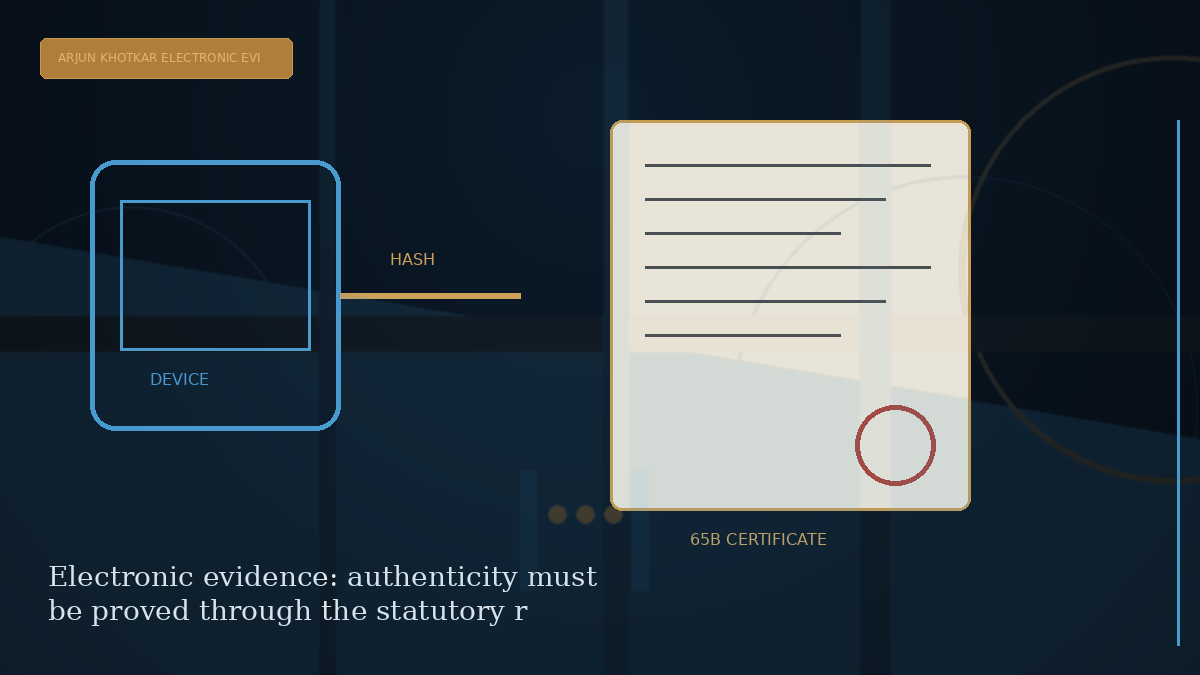
The three-Judge Bench revisited the law on electronic evidence and held that the certificate contemplated by Section 65B(4) is a condition precedent where secondary electronic evidence is sought to be admitted. It clarified the distinction between production of the original electronic device and reliance on a computer output or copy.
Why it matters
The judgment is a core authority for litigation involving emails, CCTV material, electronic records, digital communications and device-generated material. It also reinforces a broader professional principle relevant to AI-assisted legal work: digital material must be traced to a legally provable and verifiable source before reliance.
CRUX practice note
For electronic evidence, preservation and proof strategy should be considered when the record is first collected—not after pleadings are complete. The original device, chain of custody, method of extraction and Section 65B requirements should be mapped before the material becomes central to the case.
Official source
The link below is to the Supreme Court of India’s official judgment repository.
This Insight is for general informational purposes only and does not constitute legal advice.