
The Crux
What the Court held
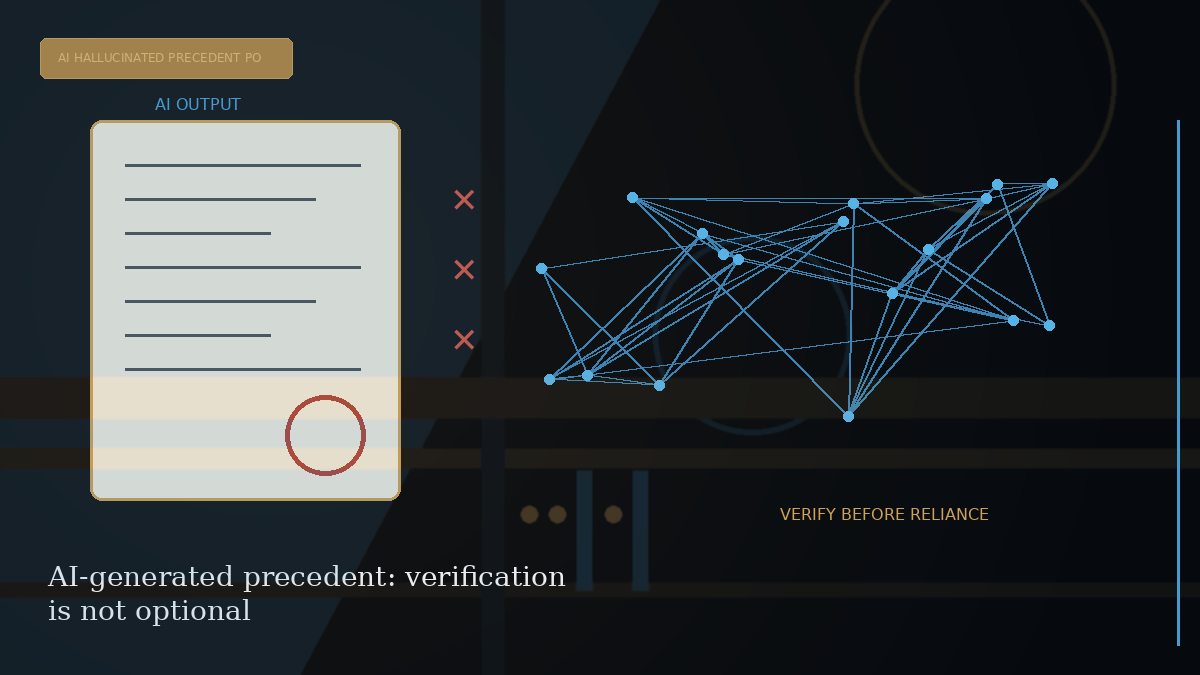
The Supreme Court dealt with NCLT and NCLAT decisions that had relied on citations later found to include non-existent judgments and passages that did not exist in genuine authorities. The Court set aside the impugned decisions and restored the Section 7 IBC application for fresh consideration.
The Court adopted a zero-tolerance approach to fake or hallucinated precedent and stressed that technological assistance does not displace professional and judicial responsibility for verification.
Why it matters
The judgment is important well beyond insolvency practice. It establishes a professional discipline for AI-assisted legal research: a generated citation, quotation or proposition is only a research lead until the underlying authority has been located and checked.
CRUX practice note
Where AI or automated research tools are used, the safe workflow is source-first: locate the judgment on an official or authoritative repository, verify the case name and citation, read the relevant passage in context, and only then rely on the proposition in advice, pleadings or submissions.
Official source
The Supreme Court of India lists this decision in its official Landmark Judgment Summaries. The source below is the Court's official page and records the neutral citation, date, questions and decision.
This Insight is for general informational purposes only and does not constitute legal advice. It should not be relied upon as a substitute for the judgment text or advice on specific facts.